
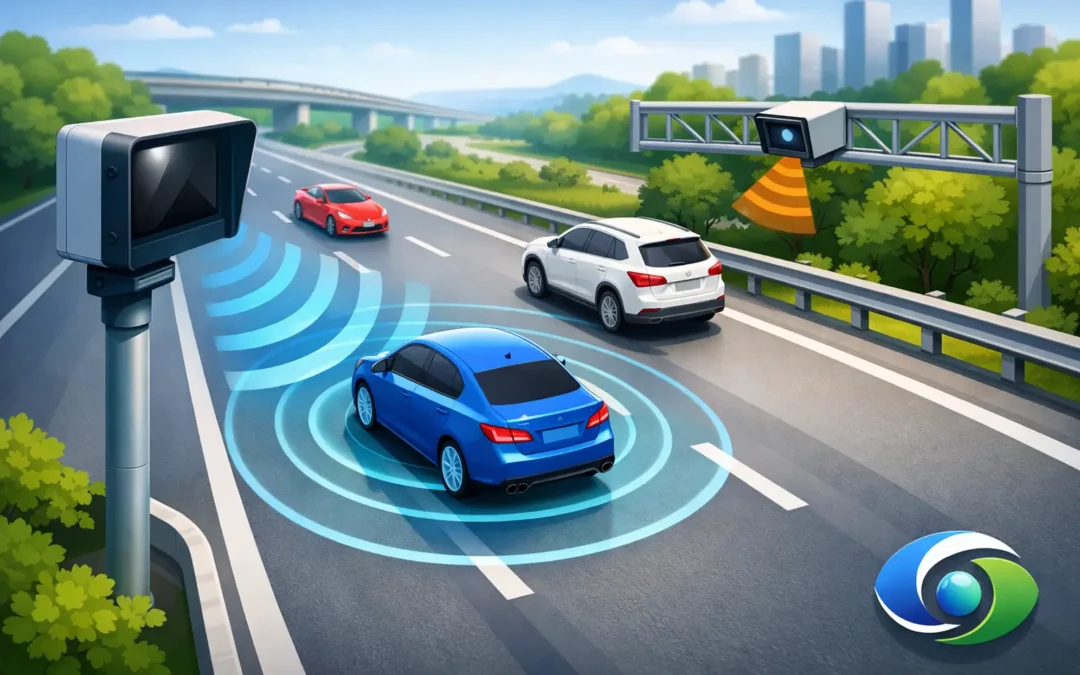
A detector can report a vehicle every time one passes and still be the wrong detector for the junction. For highways teams, the useful question is not simply whether radar works, but how accurate are radar traffic detectors for the decision being made: calling a signal stage, measuring approach speed, monitoring queues, counting traffic or identifying vulnerable road users.
Infrastructure-grade radar can deliver highly dependable detection when it is correctly selected, positioned and configured for the site. However, there is no single accuracy figure that applies to every road, radar unit or application. Detection performance is shaped by traffic conditions, installation geometry, the required detection zone and the level of detail required from the data.
How accurate are radar traffic detectors in practice?
Radar traffic detectors use radio waves to identify moving and, with suitable technology and configuration, stationary road users within a defined field of view. They can provide vehicle presence, speed, direction, range and tracking information without cutting into the carriageway. This makes them a practical alternative to inductive loops where lane closures, civil works and ongoing maintenance are unacceptable.
For straightforward vehicle presence detection on a clear approach, a well-engineered radar installation can achieve very high detection reliability. Yet reliability must be measured against an agreed truth source and operating scenario. A detector used to extend a green phase needs consistent recognition of vehicles in its call zone. A traffic counter needs accurate totals across hours, days and traffic mixes. A safety scheme may require reliable separation of cyclists, pedestrians and vehicles in more complex movements.
These are different tests. A headline percentage without the test conditions, lane layout, mounting height, range, traffic density and detection rules offers little value to a scheme designer.
Detection accuracy is not the same as speed accuracy
Radar is particularly strong at measuring speed because it directly measures movement using the reflected radio signal. Depending on the radar type and its installation, speed data can be highly precise. But a precise speed reading does not automatically mean perfect vehicle counts or classification.
A detector may accurately measure the speed of every tracked object while finding it more difficult to distinguish two closely spaced vehicles travelling side by side, or to maintain an individual track through a busy merge. Likewise, a radar may detect a cyclist reliably but require careful configuration to separate them from slow-moving vehicles or roadside movement.
When specifying performance, it is therefore sensible to separate four measures: presence detection, speed measurement, count accuracy and classification accuracy. Each should be validated against the operational requirement rather than assumed from a single product specification.
What affects radar detector performance?
Radar operates in rain, fog, darkness and glare conditions that can impair camera-based detection. That resilience is one reason it is widely used for signal control, speed monitoring and traffic data collection. It is not, however, immune to poor site design.
The most significant influence is installation geometry. Mounting position, height, angle and orientation determine how the radar sees approaching, departing and crossing traffic. A unit mounted too low may be screened by queuing vehicles. A poor angle can reduce coverage at the far end of a detection zone or introduce unwanted returns from adjacent lanes, guardrails and street furniture.
Road geometry matters too. Crests, sharp horizontal curves, steep gradients and complex multi-lane approaches all change the available line of sight. At a junction, the detector must be configured to recognise the intended movement while excluding vehicles on nearby lanes, turning bays, slip roads or parallel roads.
Traffic behaviour is equally relevant. Closely following vehicles, stop-start congestion, large lorries obscuring smaller vehicles and unconventional movements can all test a detector’s tracking capability. Modern multi-target radar is designed to manage dense traffic more effectively than basic motion sensing, but the detection zones and object rules still need to reflect the actual site.
Environmental clutter can also affect performance. Metal fencing, sign gantries, parked vehicles and moving vegetation may generate returns that require filtering. Correct commissioning reduces false calls by defining zones, directions, speed thresholds and object behaviour appropriate to the location.
Why commissioning matters more than a laboratory figure
Radar is non-intrusive, but it is not fit-and-forget. The physical installation is usually fast and avoids disruptive carriageway excavation, yet the technical work remains important. A detector should be surveyed against the required coverage area, installed on a stable mounting point and configured with the signal strategy, traffic movements and safety objectives in mind.
For a signal-controlled junction, this means agreeing whether radar is providing stop-line presence, advance detection, queue management or a combination of these functions. Detection areas should be checked at the times of day that matter, including peak queues, low-flow periods and darkness where relevant.
For traffic surveys and permanent monitoring, validation should compare radar records with a defined reference sample. Manual classified counts, video review or a temporary reference system can establish whether the system is correctly reporting volume, speed, lane use and vehicle classes. The sample must include representative traffic rather than a short quiet period that masks errors.
Acceptance criteria should also recognise the cost of different errors. A missed vehicle at a signal can add delay or create a poor user experience. A false call may add unnecessary green time and reduce network efficiency. In a safety application, missing a cyclist or pedestrian may carry greater operational weight than a small discrepancy in vehicle classification.
Radar compared with loops and AI video detection
Inductive loops have long been a familiar option for vehicle presence detection. When correctly installed and maintained, they can perform effectively, but their installation requires carriageway cutting and traffic management. Loop failures can mean repeat roadworks, disruption and maintenance costs, particularly on heavily trafficked routes.
Above-ground radar removes that embedded infrastructure. It can be installed and adjusted without disturbing the road surface, supporting faster deployment and easier future changes to the detection layout. Radar also performs consistently in darkness and adverse weather, where conventional video can face visibility constraints.
AI-powered video detection brings a different strength: visual scene understanding. It can be particularly valuable where a scheme requires detailed classification, pedestrian movements, turning behaviours, queue visualisation or detection of multiple road-user types. However, camera performance depends on a clear image and appropriate lighting, while privacy, obscuration and scene complexity need consideration.
The best answer is often not radar versus video. A combined approach can use radar’s reliable ranging and speed measurement alongside AI video’s visual classification capability. The appropriate architecture depends on the required outcome, not the technology label.
Choosing the right accuracy target
Before selecting a radar detector, define what the system must do when the detection is correct and what happens when it is not. This turns a broad demand for accuracy into an engineering requirement.
For signal control, key questions include which lanes and approaches require coverage, whether stationary vehicles must be detected, how far upstream calls are needed and whether buses, cyclists or emergency vehicles need different treatment. For speed information displays, the focus is on stable, credible speed readings within the chosen approach distance. For data-led network management, the priority may be repeatable trends and classifications that support decisions over months rather than individual detections.
It is also worth considering adjustment over the asset life. Road layouts change, kerbside activity evolves and traffic patterns shift. Above-ground detectors can be re-aimed and reconfigured as the network changes, helping authorities protect the value of the installation without reopening the carriageway.
A practical standard for dependable radar detection
The most reliable projects begin with a site-specific detection plan, not a generic accuracy claim. That plan should define the road users to be detected, the zones and movements that matter, the required response time, the validation method and the acceptable error types. It should then be tested in live conditions before handover.
C & T Technology applies this practical approach to above-ground traffic detection: matching radar and AI video capabilities to the operational problem, while reducing installation disruption and maintenance exposure. The outcome is not merely more data. It is detection that supports safer roads, reduced congestion and better-informed traffic management.
A radar detector is accurate when it gives traffic engineers dependable information at the point where a decision must be made. Specify that decision first, validate performance at the site, and the technology can deliver far more than a replacement for loops.